

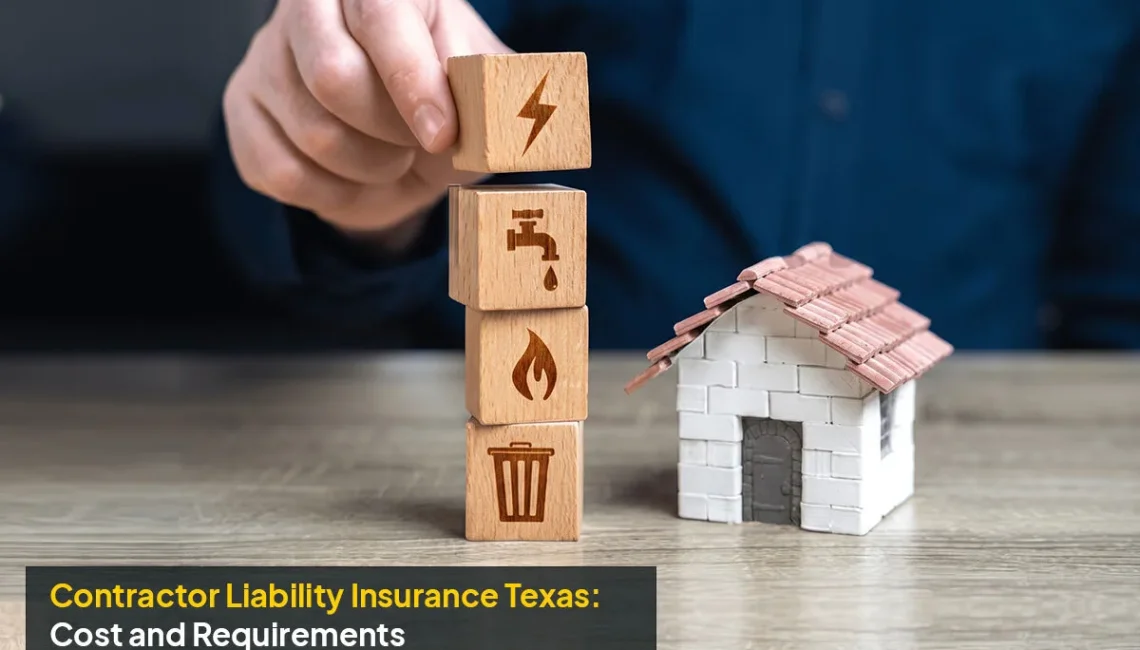
Contractor liability insurance Texas helps protect contractors from claims tied to customer injuries, property damage, completed work issues, subcontractor mistakes, and contract requirements.
If you work on homes, rentals, offices, stores, or job sites, liability is part of the job. A ladder can scratch a customer’s floor. A helper can damage a wall. A finished repair can fail weeks later. Contractor liability insurance Texas gives your business a practical layer of protection before one mistake turns into a serious bill.
What Is Contractor Liability Insurance Texas?
Contractor liability insurance Texas usually means general liability insurance for contractors. It is the policy many clients, landlords, property managers, and general contractors ask for before work begins.
The Texas Department of Insurance explains that commercial general liability insurance can protect business owners from liability claims involving bodily injury, property damage, and personal or advertising injury.
Contractor liability insurance Texas is not one-size-fits-all. The policy should match the work you actually do, not just the cheapest certificate you can buy. For most small contractors, contractor liability insurance Texas is about matching coverage to real jobsite risk.
Who Needs Contractor Liability Insurance Texas?
Contractor liability insurance Texas is useful for anyone paid to repair, build, install, remodel, maintain, or manage work on someone else’s property. Even small contractors can face large claims if something goes wrong.
You may need coverage if you:
- Work inside customer homes
- Remodel kitchens, bathrooms, rentals, or offices
- Hire helpers or subcontractors
- Use ladders, tools, saws, or power equipment
- Need a certificate of insurance
- Bid on property management or commercial jobs
- Work as a subcontractor under another contractor
If you handle smaller repair jobs, you may also want to review handyman insurance Texas before choosing a contractor policy.
Does Texas Require Contractor Liability Insurance?
Texas does not have one simple statewide rule requiring every contractor to carry the same liability policy. Requirements can depend on the city, permit office, trade, contract, client, project type, and whether employees or vehicles are involved.

Austin’s contractor registration guidance notes that a state license is not required to be a general contractor in Texas, but local registration, permits, insurance, and bonding rules may still apply.
You should check requirements when:
- A city permit is involved
- A client contract lists insurance limits
- A property manager asks for proof of coverage
- You perform trade-specific work
- You hire employees or subcontractors
- You use vehicles for business
Contractor liability insurance Texas should support local rules and contract requirements, but it does not replace permits, licensing, or trade-specific compliance.
What Does Contractor Liability Insurance Cover?
Contractor liability insurance Texas most often starts with general liability. The exact coverage depends on the policy, but the common goal is to protect against third-party claims.
| Example | How Coverage May Help |
| A customer trips over your materials | May help with medical costs or legal defense |
| You damage a client’s flooring | May help pay for covered property damage |
| A finished repair causes damage later | May help if completed operations applies |
| A client sues after a job site incident | May help with covered legal costs |
| A subcontractor causes damage | May help depending on policy terms and contracts |
This is where policy language matters. Some policies include completed operations coverage. Some limit subcontracted work. Some exclude certain trades or high-risk tasks.
What Is Not Covered?
A liability policy is important, but it does not cover every problem a contractor can face. Contractor liability insurance Texas usually does not cover your own injuries, employee injuries, damage to your own tools, business vehicle accidents, faulty workmanship itself, or intentional damage.
Common gaps include:
- Employee injuries
- Tools and equipment theft
- Work truck accidents
- Damage to your own work
- Professional design or advice errors
- Pollution or mold claims
- Roofing, excavation, or structural exclusions
- Claims above your policy limit
If your business uses trucks, vans, or trailers for work, review commercial auto insurance in Texas separately.
What Other Insurance Should Contractors Consider?
Contractor liability insurance Texas is often the foundation, but most contractors need to look at the full risk picture.
| Policy Type | When It May Matter |
| Tools and equipment coverage | You carry expensive tools between jobs |
| Commercial auto | You use work trucks, vans, or trailers |
| Workers’ compensation | You have employees or want injury protection |
| Builder’s risk | You work on new builds or major remodels |
| Professional liability | You provide design, consulting, or project advice |
| Umbrella liability | You need higher limits for larger contracts |
| Surety bond | A client, city, or permit office requires bonding |
Texas private employers can choose whether to carry workers’ compensation coverage in most cases, but many contractors still consider it because employee injuries can become expensive fast.
How Much Does Contractor Liability Insurance Texas Cost?

The cost of contractor liability insurance Texas depends on your trade, revenue, payroll, location, claims history, subcontractors, coverage limits, and the kind of jobs you accept. A small painter may pay differently than a remodeler, roofer, concrete contractor, or contractor managing multiple subs.
| Cost Factor | Why It Matters |
| Type of work | Higher-risk trades usually cost more |
| Annual revenue | More projects can mean more exposure |
| Payroll | Employees can increase risk and policy needs |
| Subcontractors | Uninsured subs can affect pricing and audits |
| Coverage limits | Higher limits usually cost more |
| Claims history | Past claims can raise the quote |
| Contract requirements | Some jobs require specific limits or endorsements |
The lowest price is not always the best deal. Contractor liability insurance Texas should match your work, not just produce a certificate that looks acceptable for one job.
How Do Coverage Limits Work?
Coverage limits tell you the maximum amount the policy may pay for covered claims. Contractors often see limits like $1 million per occurrence and $2 million aggregate, but the right limit depends on your contracts and risk.
Ask your agent:
- What limit does the client require?
- Does the policy include completed operations?
- Are subcontractors covered or excluded?
- Does the policy include additional insured wording?
- Are there height, roofing, or structural exclusions?
- What happens if a claim exceeds the limit?
A certificate of insurance helps you win work, but the policy behind it matters more. Contractor liability insurance Texas should protect your business after the certificate is accepted.
What Should You Check Before Hiring Subcontractors?
Subcontractors can create liability problems if the paperwork is weak. If a subcontractor damages a property or causes an injury, the claim may still come back to the contractor who controlled the job.
Before hiring a subcontractor, collect:
- Certificate of insurance
- General liability limits
- Workers’ compensation status
- Written subcontractor agreement
- Additional insured wording when required
- Proof of license for regulated trades
- Scope of work in writing
Do not rely on verbal promises. Keep certificates organized by job.
What Exclusions Should Contractors Watch For?
Before buying contractor liability insurance Texas, ask what the policy excludes. Construction work can involve serious job site risk, including falls, struck-by incidents, caught-in or between incidents, and electrocution. OSHA calls these construction Focus Four hazards.
Ask about exclusions for:
- Roofing
- Work over certain heights
- Demolition
- Excavation
- Mold or pollution
- Structural work
- Subcontracted labor
- Faulty workmanship
- Damage to your own work
An exclusion is not always a dealbreaker. It means you need the right carrier for the work you actually do.
What Information Do You Need for a Quote?
To quote contractor liability insurance Texas accurately, an agent needs a clear picture of your business.
Prepare:
- Business name and address
- Services performed
- Annual revenue estimate
- Payroll estimate
- Number of employees or helpers
- Subcontractor details
- Job size and project types
- Prior insurance history
- Claims history
- Certificate or contract requirements
If a contract asks for specific limits, additional insured status, waiver of subrogation, or primary and noncontributory wording, show the contract before buying.
What Mistakes Should Contractors Avoid?
Avoid these mistakes when shopping for contractor liability insurance Texas:
| Mistake | Why It Hurts |
| Buying only the cheapest policy | It may exclude your real work |
| Hiding subcontractors | Audits and claims can become complicated |
| Ignoring contract wording | A client may reject your certificate |
| Using personal auto for business | A claim may be limited or denied |
| Not covering tools | Theft can become an out-of-pocket loss |
| Letting coverage lapse | You may lose jobs or violate contracts |
The better approach is simple: tell the agent exactly what you do, where you work, who helps you, and what your clients require.
How Lopez Auto Insurance Helps
Lopez Auto Insurance helps Texas contractors compare coverage options from multiple carriers. Our agents can review your trade, contract requirements, subcontractor exposure, vehicles, tools, and proof-of-insurance needs before you choose a policy.
If you need contractor liability insurance Texas for a client, permit office, property manager, or subcontractor agreement, Lopez Auto Insurance can help you understand the quote before you pay.
Ready to Protect Your Contracting Business?
If you need contractor liability insurance Texas, Lopez Auto Insurance can help you compare coverage, understand policy options, and get proof of insurance for jobs that require it.
Call (469) 397-4330 or visit a nearby Lopez office. Hablamos Español.
FAQs
Contractor liability insurance Texas usually means general liability coverage for contractors. It can help with covered claims involving customer injuries, property damage, completed operations, and legal defense.
Not always statewide. Requirements can come from cities, permits, clients, contracts, property managers, or trade-specific rules.
The cost depends on your trade, revenue, payroll, subcontractors, claims history, coverage limits, and job type. Comparing carriers is the best way to price it.
Not always. Some policies limit or exclude subcontracted work. Always ask how subcontractors are handled and collect certificates before work begins.
Usually no. Tools often need separate tools and equipment coverage or inland marine coverage.