

Commercial Auto Insurance in Texas

Tell us how you use your vehicles for work.

From job-site trips to daily deliveries, the way you use a vehicle matters. Lopez Auto Insurance & Tax helps Texas business owners review commercial auto options based on their vehicles, drivers, and work. Start with your business details; we will help you understand the available coverage.

English & Spanish Local DFW offices
Coverage Business Types Cost Texas Requirements Get a Quote

What Is Commercial Auto Insurance?

What Commercial Auto Insurance Covers

Commercial auto insurance addresses risks from vehicles used for business. A policy may include liability and protection for an insured vehicle, with coverage determined by its limits, exclusions, covered drivers, and terms.

Who Needs Commercial Auto Insurance?

Contractors, delivery businesses, trucking companies, service providers, and other businesses that use vehicles to transport people, goods, tools, or equipment should review their vehicle use with an agent. Ownership, drivers, routes.

Commercial Auto Insurance vs. Personal Auto Insurance

A personal policy may limit or exclude certain business use. Tell your agent about job-site travel, deliveries, and other work-related driving. A vehicle registered in your own name or under a business name is not automatically covered for every business activity.

Explore personal auto insurance

Commercial Auto Insurance Coverage Options

Commercial Auto Liability Coverage

Can help pay covered third-party injury or property damage claims when an insured is legally responsible for an accident involving a business vehicle. It does not cover injuries to the insured driver or damage to the insured's own vehicle. Payments depend on the policy and liability limits.

Physical Damage Coverage

Addresses loss or damage to your insured vehicle. It may include collision coverage for damage caused by an accident and comprehensive coverage for non-collision losses; check which are included and their deductibles.

Collision Coverage

May help pay to repair or replace an insured vehicle after a covered collision or rollover, regardless of who is at fault, subject to the deductible and policy terms.

Comprehensive Coverage

May help pay to repair or replace an insured vehicle after a covered non-collision loss, such as theft, fire, vandalism, or hail. Covered events, exclusions, and payment terms vary by policy.

Coverage for Business-Owned Vehicles

The business name, vehicle ownership, vehicle type, and work performed need to match the insurance arrangement. Confirm which vehicles and uses the policy covers.

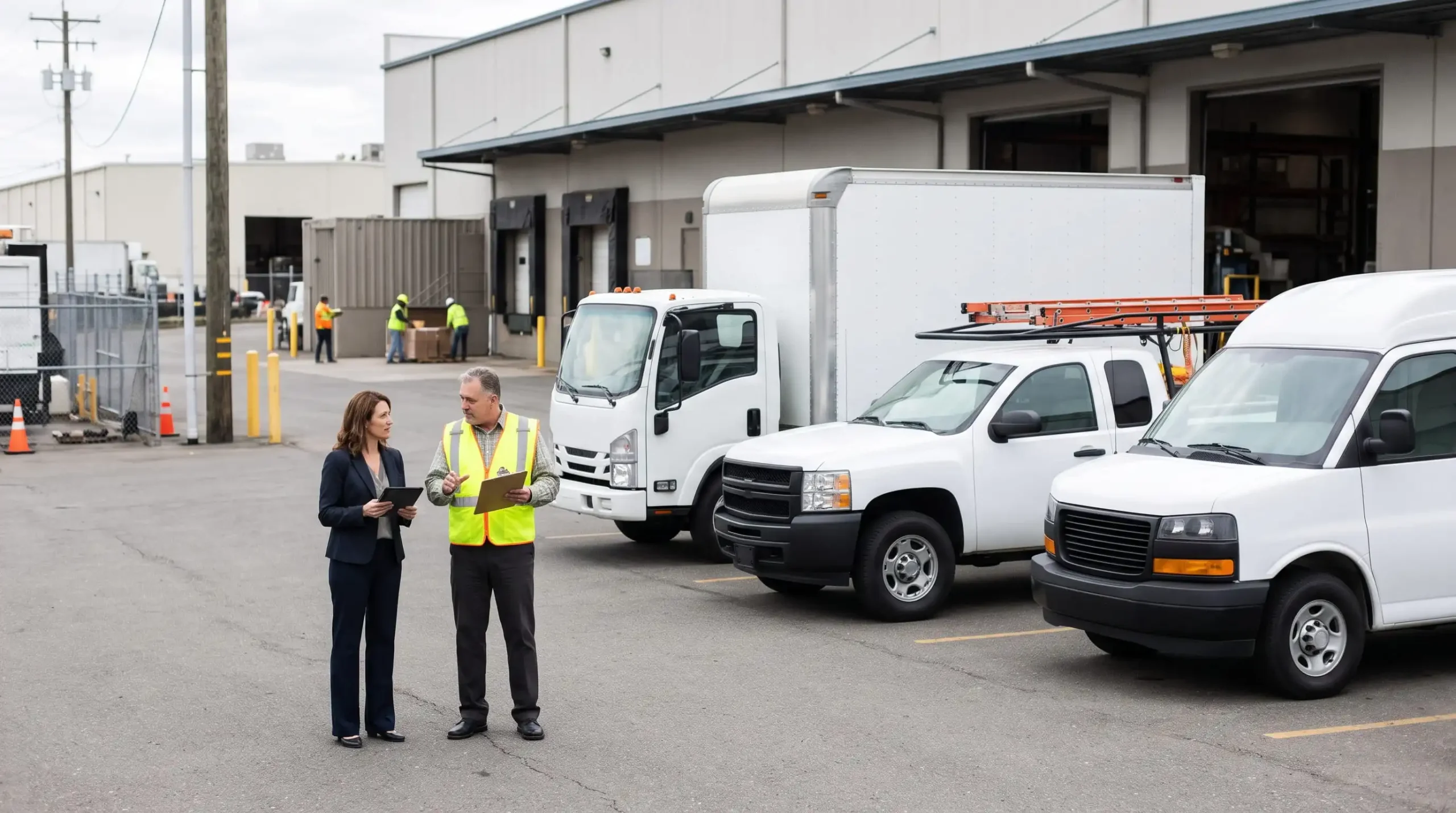
Commercial business vehicles parked at a distribution facility

Commercial Auto Insurance for Different Businesses

Commercial Auto Insurance for Contractors

Travelling between job sites or carrying materials? Discuss the truck or van, its drivers, trailers, and daily use. Vehicle coverage and protection for the tools inside need separate attention.

Commercial Auto Insurance for Delivery Businesses

Explain what you deliver, how often, and whether you work through an app or your own business. Coverage needs can differ between delivery work and personal driving.

Commercial Auto Insurance for Service Businesses

If you or your employees drive to customer locations, describe the routes, vehicles, and services. The policy should reflect how the vehicles are actually used.

Commercial Auto Insurance for Fleets

Have more than one work vehicle? Review the vehicles, drivers, and uses together. Coverage and eligibility depend on the number and types of vehicles, authorized drivers, business uses, and the policy's terms, limits, and exclusions.

Commercial Auto Insurance for Mobile Businesses

For a food truck or mobile service vehicle, explain the business activity and any fitted equipment. Ask which vehicle risks are covered and what may need separate protection.

Explore insurance considerations for contractors

What Affects Commercial Auto Insurance Cost?

A quote starts with how your business uses its vehicles. These details can change the available options and price.

Vehicle Type and Value

The vehicle’s size, type, value, and repair costs can affect the insurer’s assessment and the coverage price.

Business Operations

The work you do, what you transport, and where vehicles are kept help the insurer assess business driving risk.

Driving History and Drivers

Driving experience, license information, accidents, traffic violations, and whether drivers meet the policy’s requirements may affect eligibility and pricing.

Driving Distance and Usage

Annual mileage, operating radius, trip frequency, and delivery or customer-visit use can influence the quote.

Coverage Limits and Deductibles

Selected coverage, higher limits, and deductible choices affect the cost and what the business may pay after a loss.

Number of Vehicles

The number and mix of vehicles can affect policy structure and pricing. Adding multiple vehicles under one policy may simplify management.

Compare quotes using the same vehicles, drivers, business use, limits, and deductibles.

Commercial Auto Insurance
Requirements in Texas

Understanding Texas Auto Insurance Requirements

Texas financial responsibility requirements apply to vehicle operation. Some commercial motor carriers have additional insurance limits and filings depending on their vehicle type, weight, cargo, passengers, and operations. The applicable requirements must be checked for your business.

Business Vehicle Registration and Insurance

Keep vehicle registration and insurance information current. If your operation requires Texas motor carrier authority, insurance filings are part of that process. Vehicle registration, insurance coverage, and operating authority are separate requirements, and businesses should verify which apply to their specific operations.

When Additional Coverage May Be Needed

A customer contract, vehicle lease, lender, or regulated operation may call for particular coverage or limits. Share those requirements before selecting a policy so they can be checked against the proposed coverage. Meeting a minimum insurance requirement does not mean every business risk is covered.

Commercial Vehicle Insurance Considerations

Vehicles Used by Employees

Explain who drives, how often, and for what work. If employees use personal or rented vehicles for business, ask whether hired or non-owned auto coverage is needed and available.

Business-Owned vs. Personally Owned Vehicles

Ownership and use both matter. Discuss vehicles titled to the business, vehicles owned personally, and any leased or rented vehicles so the insurance arrangement reflects the actual situation.

Vehicles Carrying Tools or Equipment

Do not assume insuring the vehicle also insures everything inside it. Loose tools, stock, or customer goods may require separate coverage, such as tools and equipment insurance or inland marine insurance. Confirm how the policy treats permanently attached equipment.

Commercial Auto Insurance for Specialized Uses

Describe deliveries, app-based driving, passenger transport, or mobile operations before choosing coverage. Acceptance and required protection depend on the insurer and specific use; one commercial policy does not fit every activity.

Read about business vehicle use

How to Choose Commercial Auto Insurance

Identify Your Business Vehicle Needs

List the vehicles, who drives them, what they carry, and the work they do. Include regular routes and occasional uses.

Evaluate Coverage Limits

Review potential injury and property damage claims alongside contract requirements. Ask what the business could owe if a covered claim exceeds its limits.

Review Deductibles and Policy Terms

Check the applicable deductibles, covered vehicles and drivers, excluded uses, and claim-payment terms. Ask how changes to vehicles or drivers should be reported.

Consider Your Business Operations

A contractor’s job-site trips, a delivery route, and a service fleet create different questions. Include every activity when describing your business.

Get Help Evaluating Available Options

Lopez can help you review available options and compare the coverage, limits, deductibles, and cost for your business.

Business owner reviewing commercial vehicle operations and insurance

What Information Do You
Need for a Commercial Auto
Insurance
Quote?

These details can help start the conversation. Lopez and the insurer will confirm what is needed for your business and the available policy options.

Business Information

Business name, location, type of work, and contact details.

Vehicle Information

Year, make, model, ownership, and vehicle identification numbers if available.

Driver Information

Who will drive, license details, experience, and relevant driving history.

Vehicle Use and Business Operations

What vehicles carry, usual routes, mileage, delivery work, and any specialized use.

Coverage Needs

Desired limits and deductibles, current insurance, relevant claims history, and contract or lender requirements.

Commercial Auto Insurance Claims

What to Do After a Business Vehicle Accident

Prioritize safety and get emergency assistance when needed. Exchange details, document the scene when safe, and contact your insurer promptly with the policy, vehicle, driver, and incident information.

Understanding Your Commercial Auto Policy

The insurer reviews the incident against the policy’s coverage, limits, deductibles, exclusions, driver eligibility, and terms. A claim report does not guarantee payment; ask what records the insurer needs.

Commercial Auto Insurance vs. Commercial
Business Insurance

Commercial Auto Insurance

Focuses on covered business vehicle and driving risks. Liability and physical damage protection depend on the coverage you have and your policy terms.

Commercial Business Insurance

Protects businesses against various risks beyond vehicle-related accidents, including general liability, property damage, bodily injury, and lawsuits, depending on the coverage selected. Protection varies by policy, limits, exclusions, and the specific needs of the business.

Does Your Business Need Both?

It may. A vehicle accident and a claim arising from work at a customer's property can involve different coverage. Review your operations, contracts, and policies together.

Explore commercial business insurance

Get a Commercial Auto Insurance Quote

Find Commercial Auto Insurance
for Your Business

Tell us about your vehicles, drivers, and daily work. Lopez will help you review available policies and understand how the coverage relates to your business.

Get a Commercial Auto Insurance Quote
Finding a Lopez Auto Insurance location in the Dallas-Fort Worth area

Find a Lopez Location

Prefer to talk through your business needs in person? Find a Lopez office in the DFW area, check its current hours, and call ahead about commercial auto assistance.

Visit a Lopez Location

Frequently Asked Questions About Commercial Auto Insurance

1. What is commercial auto insurance?

It is insurance for vehicles used in business. Depending on the policy, it can address liability claims and cover damage to insured vehicles.

2. Who needs commercial auto insurance in Texas?

Businesses should review coverage when vehicles are used for deliveries, job sites, customer visits, or transporting goods. The appropriate policy and requirements depend on the actual use.

3. What does commercial auto insurance cover?

Options can include liability, collision, and comprehensive coverage. Additional options may include roadside assistance, rental reimbursement, gap coverage, personal injury protection (PIP), uninsured/underinsured motorist coverage, hired and non-owned auto coverage, cargo coverage, and towing and labor coverage. Check the insured vehicles, covered drivers and uses, limits, deductibles, and exclusions.

4. What is the difference between commercial and personal auto insurance?

Personal policies may limit or exclude some business driving. Commercial auto policies are written around business vehicle risks, subject to the uses and coverage the insurer accepts.

5. How much does commercial auto insurance cost in Texas?

Price depends on vehicles, drivers, business activity, driving distance, coverage, and insurer requirements. A quote based on your operation is more useful than a general average.

6. Can contractors get commercial auto insurance?

Contractors can ask about options for work trucks, vans, and other eligible vehicles. Available coverage depends on the business, drivers, vehicle use, and insurer guidelines.

7. Does commercial auto insurance cover delivery vehicles?

Delivery use may be covered when the insurer accepts the activity and the policy includes it. Explain what you deliver and how the vehicle is used.

8. Can a business insure multiple vehicles?

Options may be available for multiple vehicles. The carrier determines eligibility, policy structure, and how the vehicles and drivers must be listed.

9. Does commercial auto insurance cover tools and equipment?

Not automatically. Ask about loose tools, goods in transit, and attached equipment separately. Additional coverage or a different type of insurance may be needed.

10. What information do I need for a commercial auto insurance quote?

Start with your business, vehicle, driver, and usage details, plus your coverage needs. Additional information depends on the operation and insurer.

11. Can I get commercial auto insurance through Lopez?

Yes. Lopez helps business owners explore available commercial auto options. Eligibility, coverage, and price depend on the vehicles, drivers, operations, and carrier.

Request a commercial auto insurance quote or call Lopez.

Let us help you review coverage for
your work vehicles.

Get a Commercial Auto Insurance Quote